

A celebration gone awry and an expedient search for villains
A celebration gone awry and an expedient search for villains
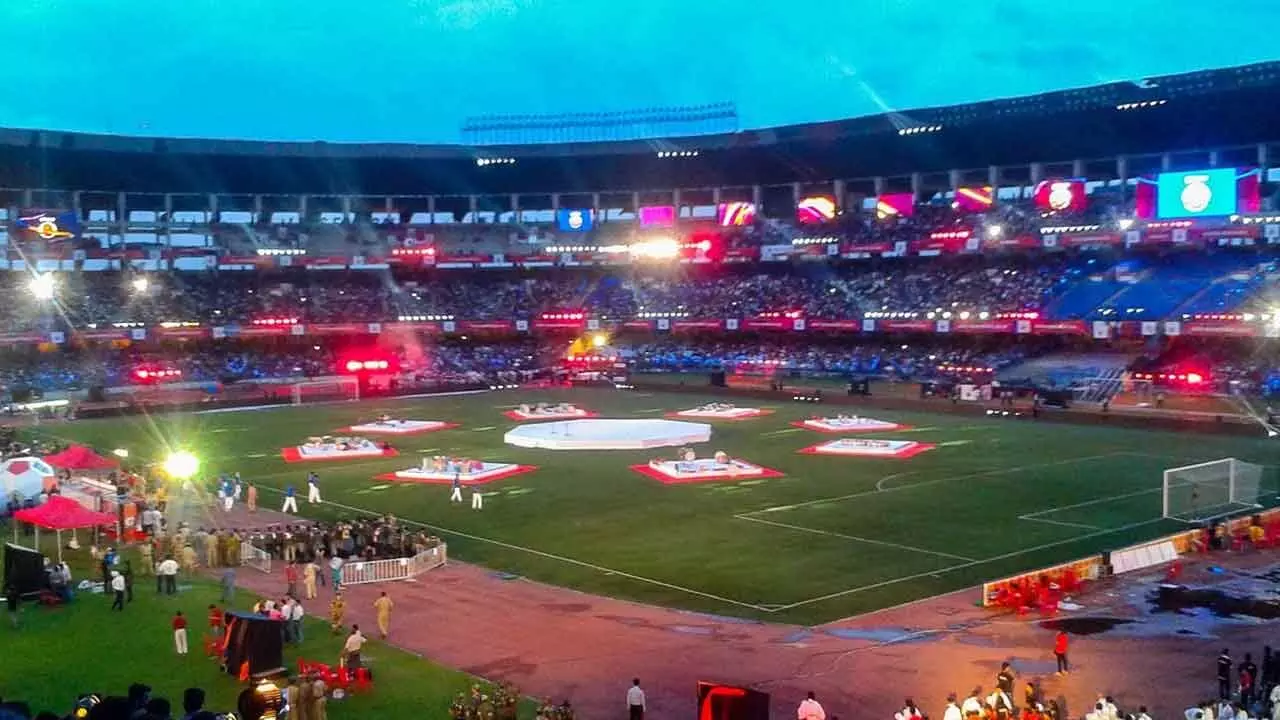
What unfolded at the Yuva Bharati Krirangan was, by any standard, a messy affair. The organisers made a complete hash of an event that promised celebration and delivered chaos. The uncalled-for and untoward incident is indefensible and deserves unequivocal condemnation.
There should be no hesitation, no equivocation, and no attempt to minimise what went wrong. Yet, condemnation need not—and must not—give way to a frenzied rush to political scapegoating.
At a time when popular sentiment is raw and disappointment palpable, reason risks being drowned out by rhetoric. But for dispassionate, sensible and logically minded citizens, the concerted attempt to malign not merely football-loving Kolkatans but the city and the state as a whole raises more questions than it answers.
More troubling is the eager effort to pin the blame squarely on Chief Minister Mamata Banerjee, as though political advantage before elections was a sufficient reason to suspend elementary distinctions between responsibility and convenience.
This was not a state government programme. It was a privately organised jamboree to which the Chief Minister was invited as a guest. The state extended support—as it routinely does—because such events contribute to brand-building and global visibility. Had the government refused assistance, it would have been accused of parochialism and obstruction.
Had it intervened deeply in the organisational details of a private event, cries of overreach would have followed just as swiftly. To orchestrate an all-out attack on the Chief Minister and her government over the mismanagement of a private spectacle should itself prompt suspicion among rational observers. One need not be a staunch supporter of Mamata Banerjee or the Trinamool Congress to recognise this.
That said, serious and valid questions demand answers. Why were water bottles and soft drink bottles—clearly prohibited under stadium regulations—allowed inside? Why was Lionel Messi permitted to be constantly surrounded, compromising both security and visibility?
Why was a raised or revolving platform not arranged so that fans in the galleries could see their icon properly? Why was he not allowed a lap of honour along the boundary, a simple gesture that could have diffused much of the crowd’s frustration? If tickets commanded such high prices, why did these elementary considerations not occur to the organisers?
In events of this scale, especially those involving an international icon, second-by-second itineraries are meticulously prepared, rehearsed and approved. Mock drills are standard practice. Did any of this take place? And is it really the responsibility of a state’s Chief Minister to supervise such granular details for a private event?
The plot thickens when national football bodies—conveniently run by the Saffron Brigade—enter the frame to blame the state government, alleging they were neither consulted nor informed. If no private football event can be organised without their consent, why did they not intervene earlier? Were they waiting for a disaster to unfold?
History offers perspective. When an unruly crowd forced the abandonment of the India–Sri Lanka match at Eden Gardens in 1996, was the then Chief Minister blamed? No. Responsibility was placed where it belonged: on an emotionally surcharged crowd and inadequate management.Crowd control failures are not unprecedented.
There are countless examples of volatile situations being defused through prompt, sensible adjustments. In this case, however, it appeared that a section of the crowd was determined to allow no such opportunity. The presence of non-sporting flags and slogans like “Jai Shri Ram” only deepens unease about motives. This was football, not a political rally.
Even government-run events are not immune to mishaps. The much-hyped Maha Kumbh Mela earlier this year witnessed untoward incidents. Who, then, was held personally responsible?
The greatest sufferers remain ordinary citizens who spent their hard-earned money for a fleeting glimpse of their hero. They deserve financial compensation. Beyond that, damage has been done to the city’s and state’s reputation—an injury borne collectively by all residents.
It is therefore a shared responsibility to repair that damage and prevent further harm. A genuine, thorough and time-bound investigation, as promised by the Chief Minister, is imperative. Let facts replace frenzy. Let accountability be fixed where it belongs. And above all, let the truth prevail.





